|
editorial |
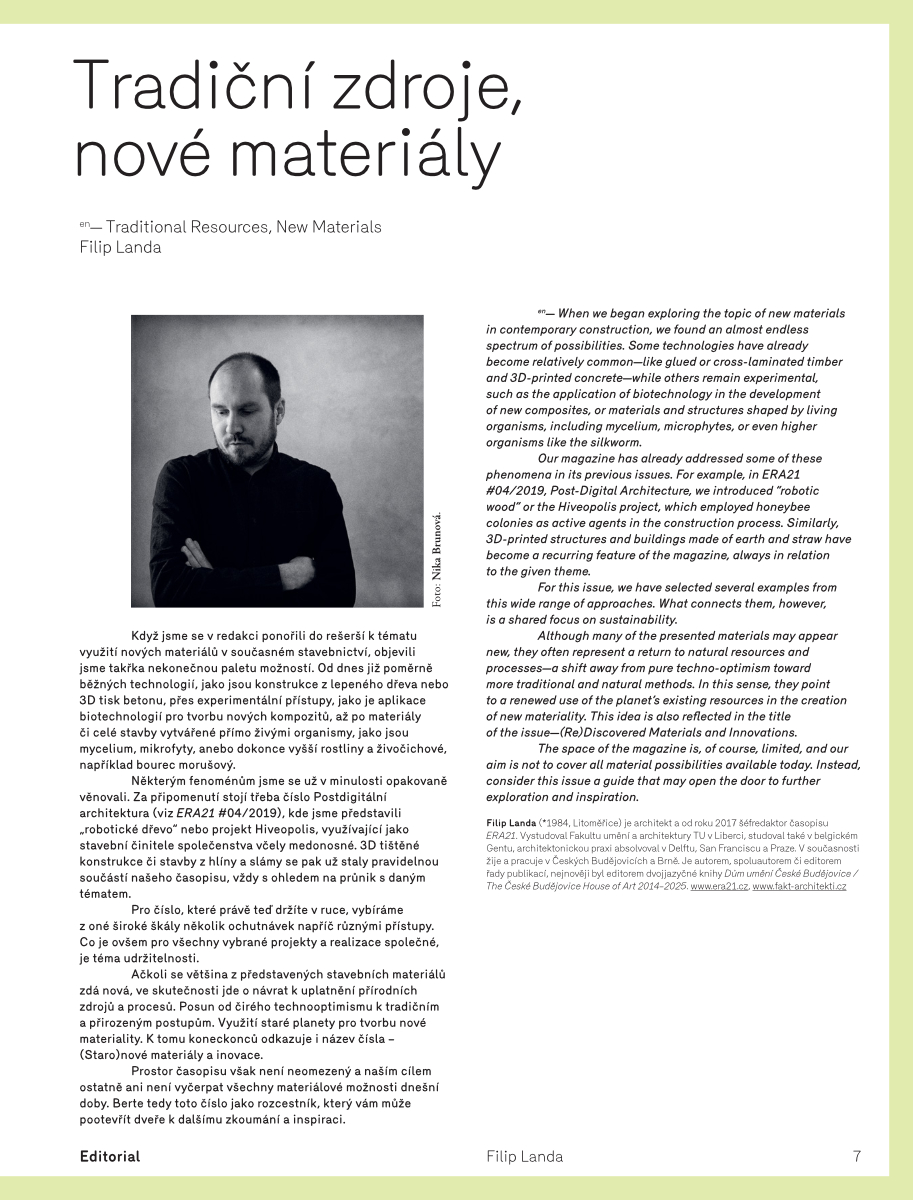
Traditional Resources, New Materials » When we began exploring the topic of new materials in contemporary construction, we found an almost endless spectrum of possibilities. Some technologies have already become relatively common—like glued or cross-laminated timber and 3D-printed concrete—while others remain experimental, such as the application of biotechnology in the development of new composites, or materials and structures shaped by living organisms, including mycelium, microphytes, or even higher organisms like the silkworm. |
| news | ||
|
completed project |
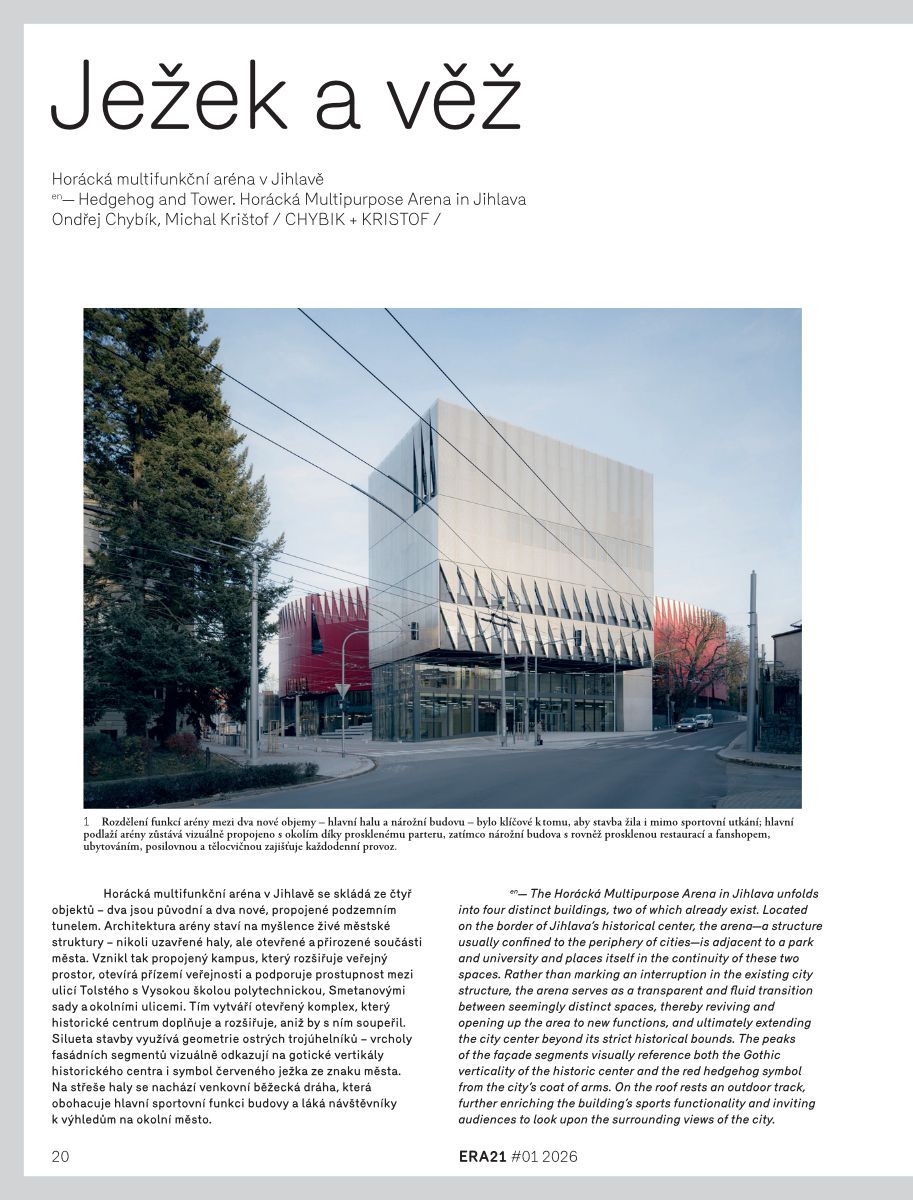
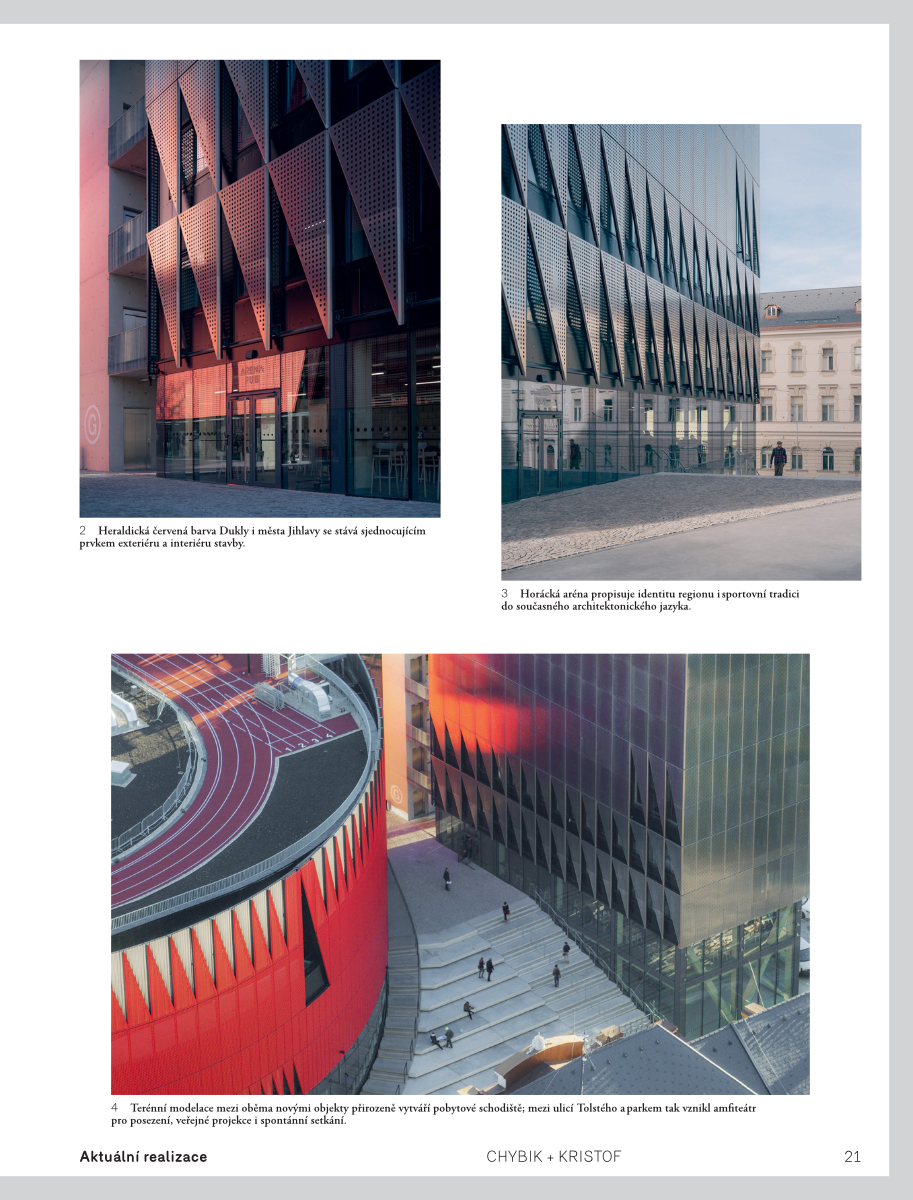
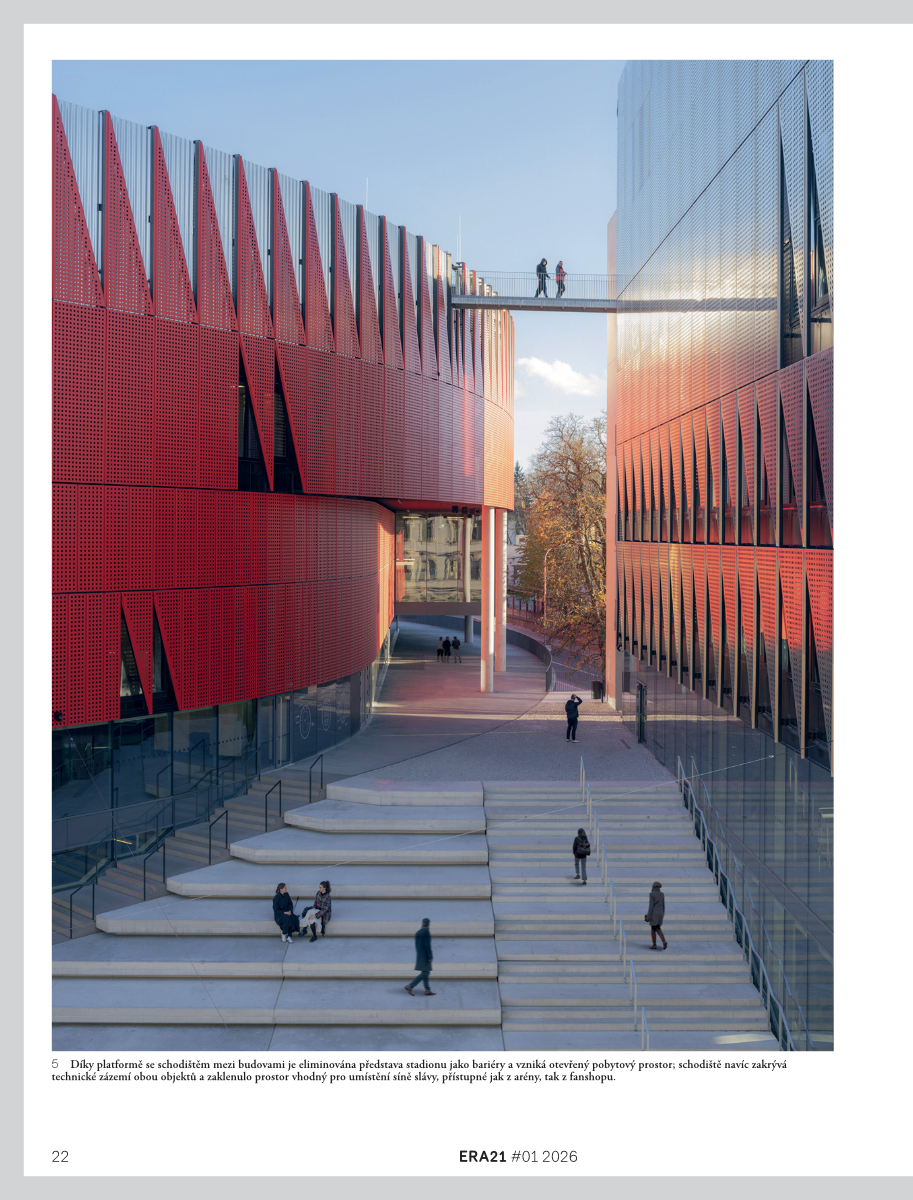
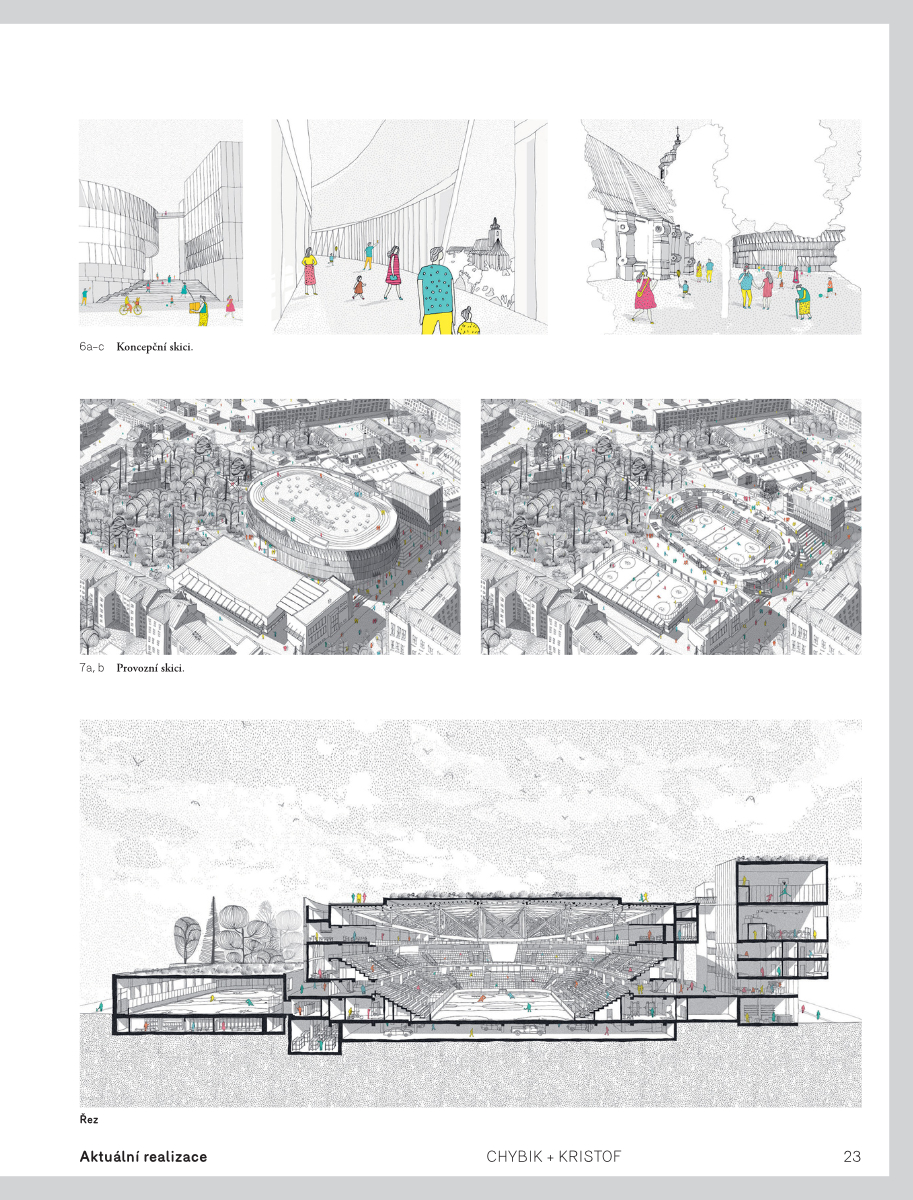
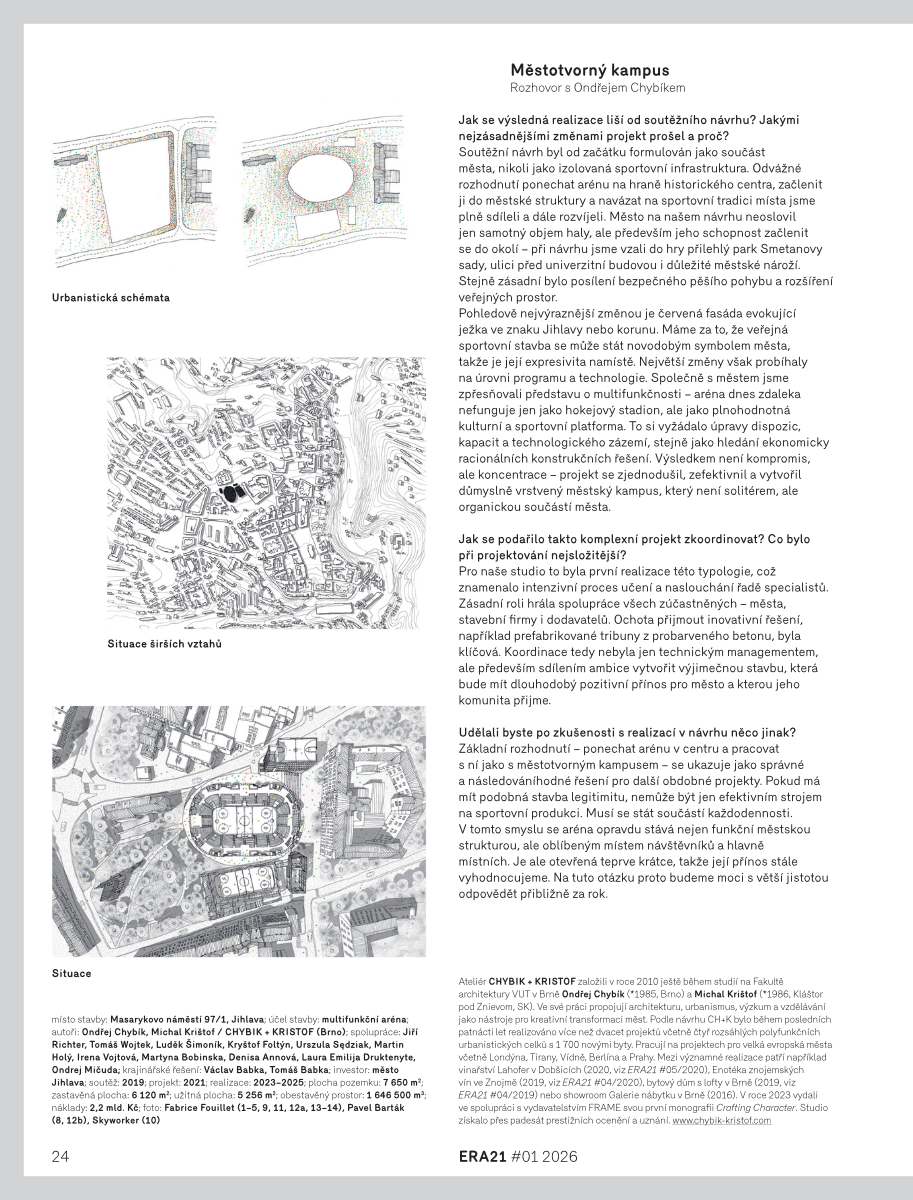
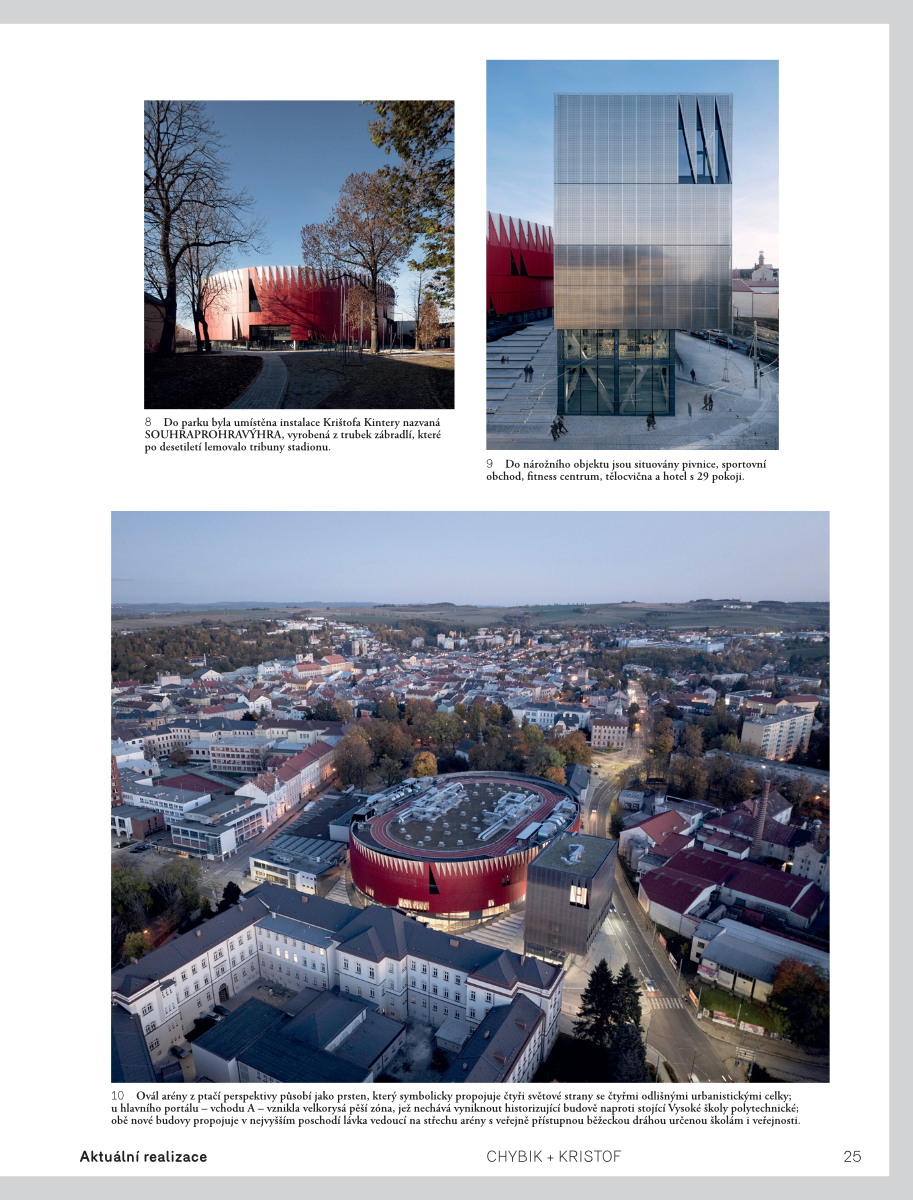
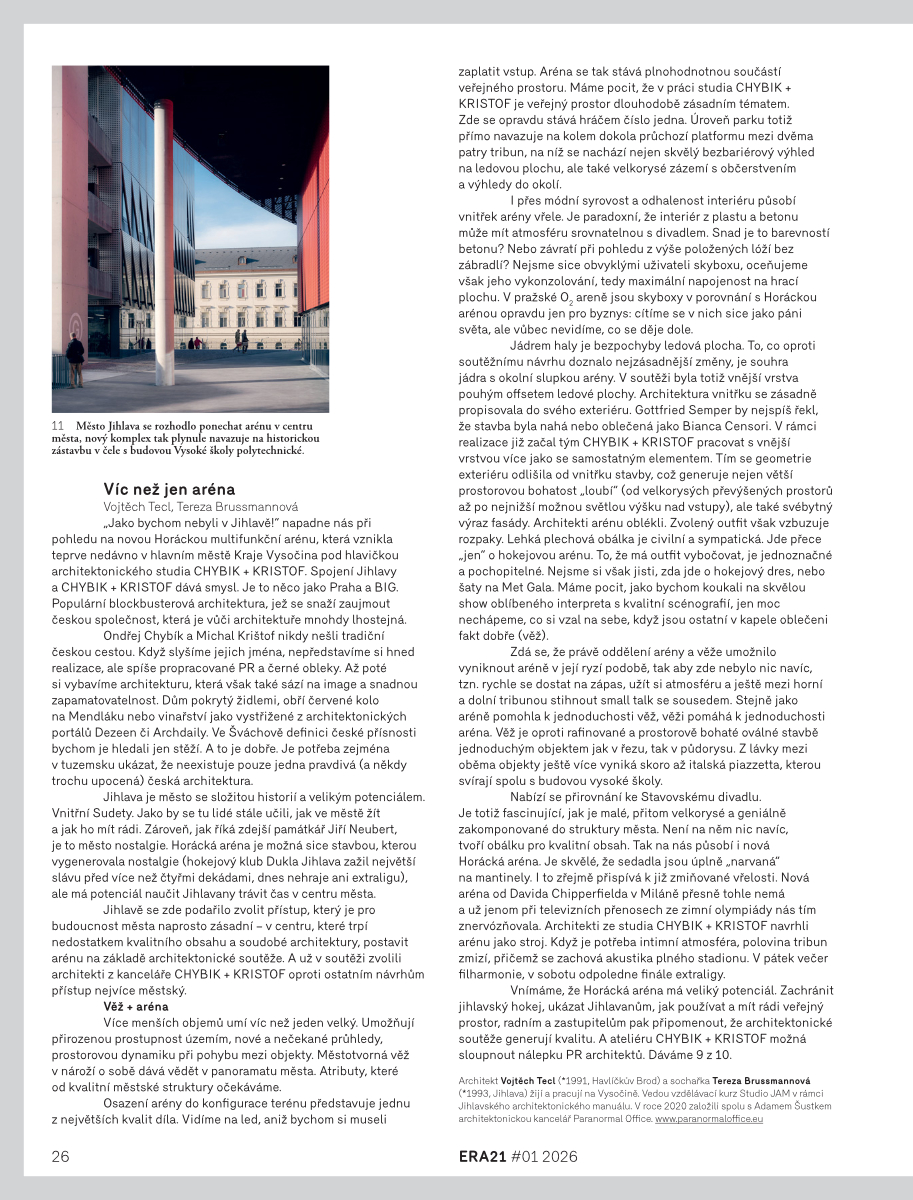
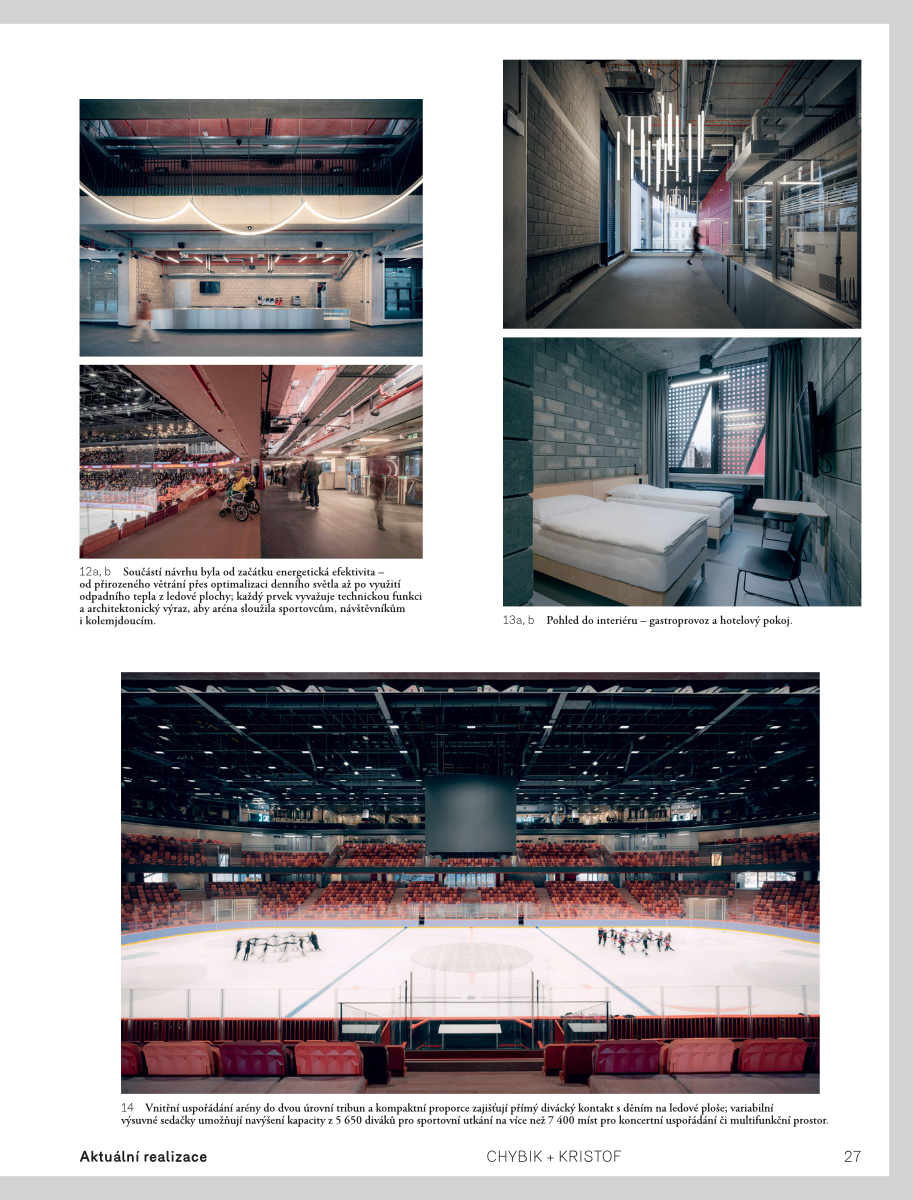
Hedgehog and Tower. Horácká Multipurpose Arena in Jihlava » The Horácká Multipurpose Arena in Jihlava unfolds into four distinct buildings, two of which already exist. Located on the border of Jihlava’s historical center, the arena—a structure usually confined to the periphery of cities—is adjacent to a park and university and places itself in the continuity of these two spaces. Rather than marking an interruption in the existing city structure, the arena serves as a transparent and fluid transition between seemingly distinct spaces, thereby reviving and opening up the area to new functions, and ultimately extending the city center beyond its strict historical bounds. The peaks of the façade segments visually reference both the Gothic verticality of the historic center and the red hedgehog symbol from the city’s coat of arms. On the roof rests an outdoor track, further enriching the building’s sports functionality and inviting audiences to look upon the surrounding views of the city. |
| intro |
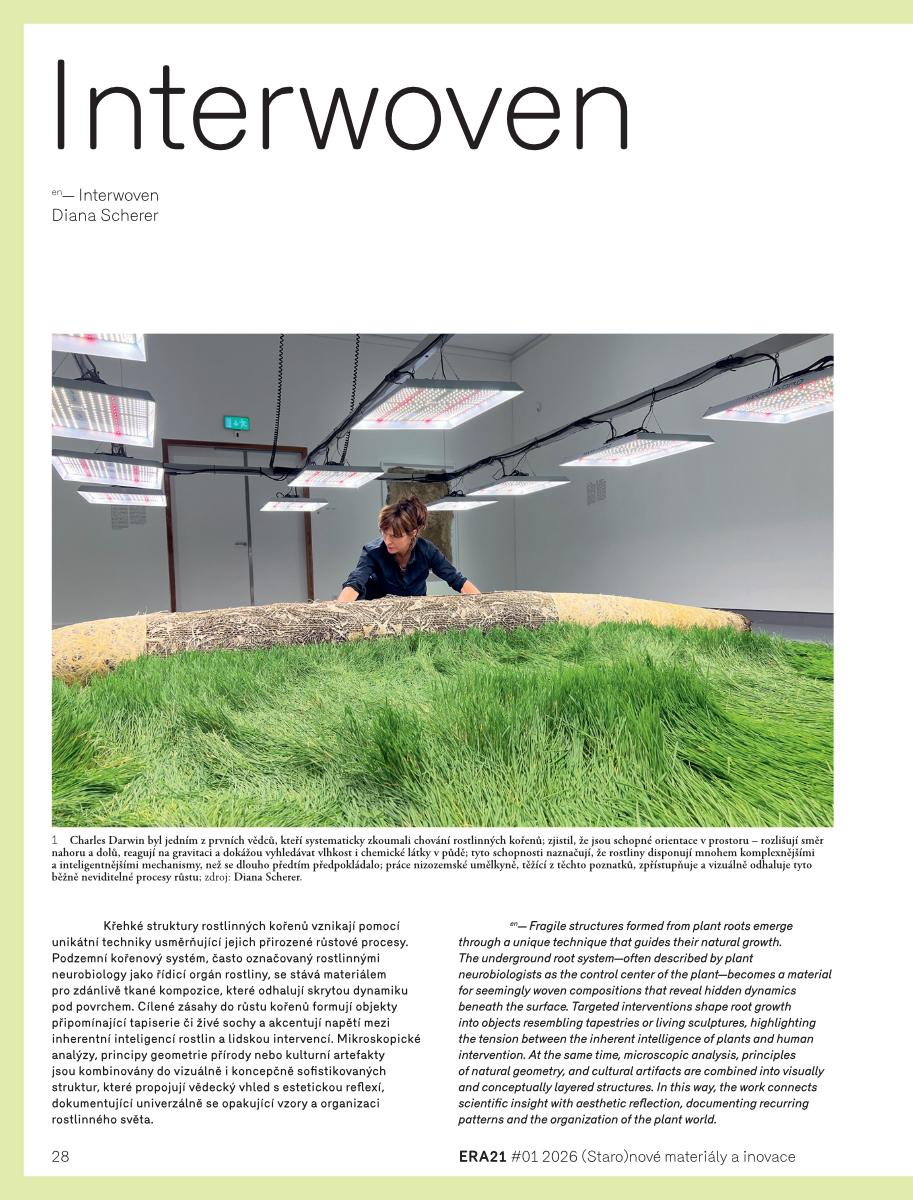
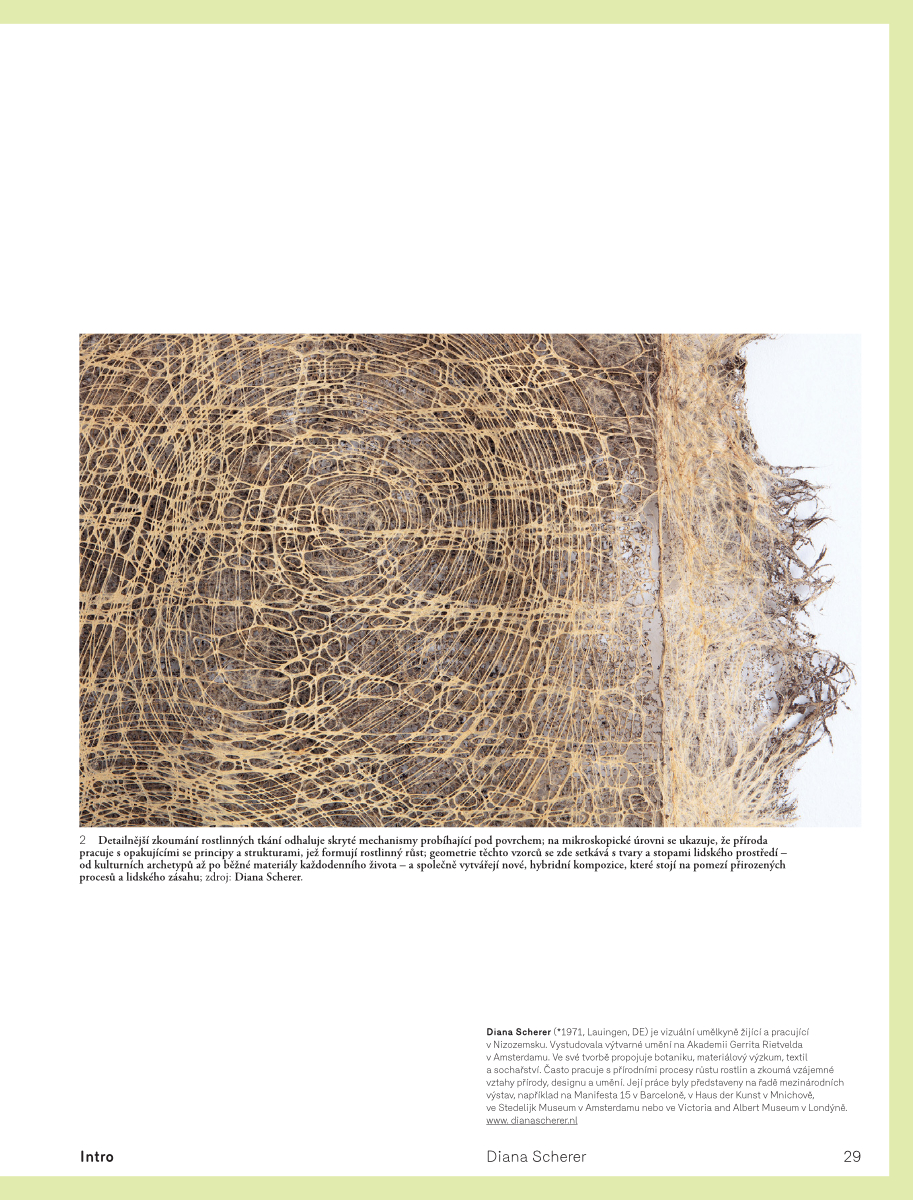
Interwoven » Fragile structures formed from plant roots emerge through a unique technique that guides their natural growth. The underground root system—often described by plant neurobiologists as the control center of the plant—becomes a material for seemingly woven compositions that reveal hidden dynamics beneath the surface. Targeted interventions shape root growth into objects resembling tapestries or living sculptures, highlighting the tension between the inherent intelligence of plants and human intervention. At the same time, microscopic analysis, principles of natural geometry, and cultural artifacts are combined into visually and conceptually layered structures. In this way, the work connects scientific insight with aesthetic reflection, documenting recurring patterns and the organization of the plant world. |
|
| theory |
The Power of Sand. A Scarce Resource at the Center of Global Politics » Sand forms the foundation of modern infrastructure while revealing complex economic, political, and ecological relationships. Coastal reclamation and artificial islands demonstrate that control over this material often translates into control over land and communities. At the same time, its granular nature underscores its inherent instability and the challenges of managing this resource. |
|
| interview |
When Fibers Become Structure » Rebeca Duque Estrada is a Brazilian architect, researcher, and doctoral candidate at the Institute for Computational Design and Construction (ICD) at the University of Stuttgart. Her work focuses on the computational design of ultra-lightweight structures, which she translates into three-dimensional objects and buildings through robotic fabrication. At the ICD, she is part of the Fiber Architecture team led by Professor Achim Menges. The team investigates the use of fibers as structural materials in sustainable construction. Over time, they have shifted away from technical fibers such as carbon and glass to natural flax as a key material. |
|
| practice |
From Acoustic Panels to Mars. The Potential of Mycelium in Architecture » Mycelium—the root-like network of fungi—is spreading across architecture and is no longer a newcomer among biomaterials. Instead, it has become an intensively researched and tested phenomenon. With each new layer of its complex structure that is uncovered, new possibilities for its use continue to emerge. But what exactly is mycelium? Why has it captured such widespread interest? And where might its development lead us next? |
|
| research |
Building Through Growth. New Materials, Untapped Opportunities: A Shift in the Architectural Design Paradigm » The debate surrounding mycelium as a building material is gradually moving beyond academia and increasingly entering construction practice. The use of its growth properties opens up new design and construction possibilities. In this way, mycelium not only contributes to more sustainable building practices, but also points to the potential emergence of new typologies and a transformation of architectural form. |
|
| completed project |
Materials Laboratory. Former Train Depot Transformed into Atelier LUMA’s Research Facility » The 19th-century train depot was converted into a research facility using materials such as sunflower, rice husk, algae, and salt. The building is organized as a linear street with a gallery, square, and an inner courtyard, housing laboratories, workshops and a multi-purpose hall. The existing stone walls and steel structure were retained and supplemented, while the newly inserted elements use local biomaterials, including indigo-treated timber and rammed earth walls, developed in collaboration with local partners to integrate research, production, and education within the regional context. |
|
| completed project |
Architecture of Sustainable Learning. Preschool and Elementary School in Châtenay-Malabry » Designed for 540 children, the school unfolds organically along the sloping site of a new eco-district in the southwestern metropolitan area of Paris. It forms three courtyards open to the surrounding landscape: the preschool on the lower floor, the elementary school and sports facilities on the middle floor, and the central kitchen on the top floor. The design places strong emphasis on sustainability and a low carbon footprint, reusing materials from the demolition of previous structures on the site and incorporating rammed dry concrete, hemp- -and-earth partitions, and recycled sand for the floors. Bioclimatic design, modular construction, and flexible layouts enable long-term adaptability and the future reuse of wood and other natural materials. |
|
| completed project |
Traditionally Contemporary. Our Lady of Sorrows Chapel in Nesvačilka » The chapel is conceived as a place of calm and escape from everyday life, rooted in the long-standing spiritual tradition of the region while expressing it through a contemporary architectural language. The building combines traditional carpentry techniques with digital fabrication and works exclusively with solid timber, avoiding glued joints. Emphasis is placed on the natural properties of materials, local sources, and craftsmanship. The project opens a dialogue between past and present, demonstrating how traditional construction principles can be reinterpreted in the context of today’s technologies and environmental demands. |
|
| completed project |
Digital Age Tectonics. The Enterprise Cable Car Upper Station with Visitor Center in Kopřivná » The cable car station is the first public building in the Czech Republic constructed using 3D concrete printing (3DCP) in a mountainous environment. Its organically shaped structure, inspired by the rock formations of the Jeseníky Mountains, combines robotically printed reinforced concrete elements with monolithic structures, a green roof, and an observation deck. The project demonstrates the potential of parametric design and digital fabrication while maintaining structural reliability, energy efficiency, and architectural quality. Serving as an information center, cable car control station, and visitor facility, the building represents a significant step toward integrating technology, architecture, and the surrounding landscape. |
|
| completed project |
Grove. World of Volvo in Gothenburg » The World of Volvo building in Gothenburg offers a 22,000-square-meter journey through the history and current innovations of the Volvo brand. The building’s design concept is inspired by the Swedish concept of ‘Allemansrätten’, which guarantees the right to move freely in nature regardless of land ownership, while emphasizing responsible behavior toward the environment. The load-bearing structure of the circular building consists of three monumental cross-laminated timber columns that support the roof. It is one of the largest CLT structures in the world. The geometry was rationalized to align with the load-bearing capacity of timber, column spacing, and roof curvature, creating a spatial experience reminiscent of moving through a forest. |
|
| completed project |
Arbortecture. Fab Tree Hab » The first ever “terrestrial reef” structure represents a new kind of architecture—architecture formed by living, grafted trees that connects humans with the surrounding ecosystem and opens up new possibilities for sustainable design. It creates a shared environment for people and other organisms, where traditional cultivation techniques combine with digitally designed arched structures made of cross-laminated timber (CLT). The ambition is to develop a prototype dwelling that blends naturally into the landscape, supports biodiversity, and replaces conventional industrial materials with durable, nature-based alternatives. |
|
| completed project |
Bubble. AirBubble Biotechnological Playground in Warsaw » The AirBubble pavilion is the world’s first playground to use cultivated microalgae to purify air. It operates essentially as an urban laboratory, providing a testing environment for applied biotechnology and its potential to address air pollution and mitigate its impact on children’s health. In the center of Warsaw, it creates a literal bubble of clean air where children can play. The AirBubble pavilion employs Photo.Synthetica technology to enable the integration of photosynthesis into the built environment. A cylindrical timber structure wrapped in an ETFE membrane protects 52 glass bioreactors containing 520 liters of living cultures of green algae of the genus Chlorella, capable of filtering up to 200 liters of air per minute. While the liquid medium removes particles, the microalgae actively absorb pollutants and carbon dioxide, releasing clean oxygen. |
|
| research |
Moss Regimes. Embedded Biomass in Porous Ceramics » Architecture is fundamentally part of a larger planetary ecosystem. The Moss Regimes project is an experiment in a material computation that seeks to merge natural and built environments. It is a prototype façade system that operates like a tree trunk: a living, breathing, self-regulating system. The aim is to apply principles that enable a wider range of design tactics in the choreography of thermal gradients between buildings and their environment. By integrating moss into porous ceramics, a modular bio-facade is developed, which can be further analyzed through variables such as material porosity, surface geometry, thermoregulation, material gradients, and moss species. |
|
| idea |
Baubotanik » Baubotanik is a construction method based on the interaction between artifi cial structural elements and living plants. In this approach, living and non-living elements are intertwined to form specifi c composite structures. One of these long-term experiments is the so-called Plane Tree Cube, realized as part of the Regional Garden Show in Nagold in 2012. Along the perimeter of a steel structure measuring 10 × 10 × 10 meters, planters with young London plane trees (Platanus hispanica) were arranged across six levels. The plants gradually graft together until they merge into a single organism supplied with water and nutrients from the ground, allowing the planters to be removed. As the structure continues to develop, the inner space is expected to become increasingly enclosed toward the top as the tree canopy expands, while in the lower part the trunks thicken and gradually take over the load-bearing function of the structure supporting the viewing platforms |
|
| trends | ||
| annex | ||
| annex |





ERA21 vydává ERA Média, s. r. o. |
|
|
Phone: +420 530 500 801 E-mail: redakce@era21.cz |
|




|
WEBdesign Kangaroo group, a.s.
|